The Disclosure of Conditions and the Conditions of Disclosure
By Evan Thomas
Tags: Academic identity, Friendship, Health, Mental Health, Disability, Activism, Politics, Disruption, AI, SIG, Children

Figure 1. A panoramic view of downtown Baltimore from the Hilton Inner Harbor
I should disclose at the outset that I’m not a proper scholar of rhetoric, or composition, or communications, or anything. I’m affiliated to this field by my work, but not my dissertation. Maybe, if I flatter myself, I’m even the “expert outsider.” When I was working for a Writing Across the Curriculum program, one of my colleagues honed in on that term that we read in Naming What We Know—was the compound noun supposed to indicate someone who is an expert from outside of another discipline, or an expert at being an outsider?
My candidacy exams were on early modern literature. The early modern essay seems to me at least to be an epistle with the serial numbers filed off. If I’m an essayist writing in the classical style, I go to the great city, I sit in the salons, and I report back to my friend in the countryside. Yet if I am such an essayist writing back to his country cousin, I hold every observation at arm’s length. I am to affect a distanced stance: I can report a bon mot from the salon, but I would never divulge that I laughed at it. Better, then, to be like the essayist: to display a gem with outstretched fingers that never comes too close to the heart. If I turn the gem in the light in this way I can cast forth a bitter irony, and if I turn it in the light this way sincerity will shine forth.
Take the multifaceted term “disclosure.” One of the great golden retriever virtues of CCCC is the candor and confidence with which friends—old and new—can disclose things to each other. It is a collective act of profound solidarity. Here, over coffee, and there, over dinner, fellow professionals can confide and commiserate: it’s bad all over; this new service assignment is a real bear; I can’t believe our new dean… What my colleagues have confided in me I can only disclose with great precaution. With reverence to CCCC’s collective solidarity, I cannot betray their trust. It’s not enough to file off the serial numbers—I must dis-identify the people who chose to trust me. I must dissemble in order to disclose.
Take the case of my new friend X. Due to some affinities between interests, I found myself circulating through panels alongside some regulars. In a very thought-provoking workshop we were discussing an esoteric topic. Somewhere in the course of the conversation, X quipped, “Very well, but what is consciousness?” I understand this kind of verbal gesture normally indicates the outer limits of an exchange of ideas: past this point are ineffable metaphysics, and here be dragons. But I was feeling well-caffeinated and game, so I invoked the pragmatic maxim. I pointed out that the term “consciousness” is used for real and practical benefit among anaestheticians, who attenuate awareness routinely and methodically, locally and generally. Contrary to X’s gesture to an ineffable idea, the definition of consciousness bears something more than speculative value to at least some applications. (I share this only as a tossed-off bit of conversation; I don’t expect this staggering insight will attract a fellowship from the Templeton Foundation.)
X and I became conference pals after that. Later we went out for dinner and X disclosed that she had had a health crisis a few years ago, and with a few choice words she indicated that she had a deep and powerful sense of her mind being changed by the event. Having received that confidence, I think I understand that my sophomoric reference to anaesthesiology might have touched on something intimately vulnerable for her. She was the one for whom consciousness was not a term of metaphysics—for her, distinguishing consciousness had real stakes and real value.
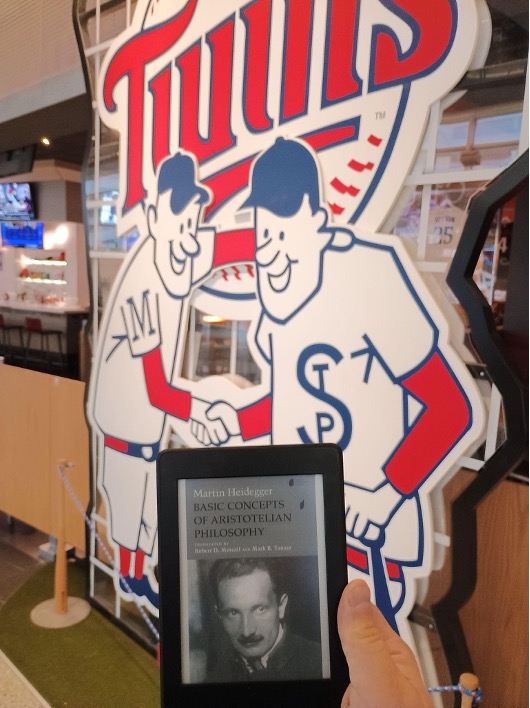
Figure 2. A photo taken in the MPLS airport of an e-reader displaying Martin Heidegger's Basic Concepts of Aristotelian Philosophy
Earlier, when X and I were on our way out to dinner, we were chatting about portfolio grading. We share an interest in David Pye, design, and in provoking students to take risks with their work. X has an artist’s eye, whereas I’ve only picked up this area of interest from casual encounters with Heideggerians. Phenomenology is on my mind when I think about the work of the documentarian because Heidegger is the philosopher par excellence of disclosure. But here I must raise a second sense of disclosure, meaning affordance, or condition. (NB: In the following, I follow the broad contours of Arendt’s Human Condition.) And on the issue of conditions, I might contribute something of value as an outsider. Look, I say, at how the gem shines when it is placed here and the light is placed here; look at how it loses its lustre otherwise.
X’s mental health is afforded to her by her brain. It can disclose to her striking insights about DITA, SIGDOC, or Zach Horton’s The Cosmic Zoom so long as an imperceptibly subtle web of veins and nerves stays within conditions that we know only crudely, and not well enough to return X to full health. These are the private, personal conditions for X to participate in the conference and the conditions that disclose or afford X access to this public. I’m sure these points are well known to disability scholars. I was pointedly reminded of this form of expertise by the leaflets scattered around the Baltimore Convention Center advertising Margaret Price’s Crip Spacetime.
On a lighter note, CCCC was conditioned by the 2025 Northeast Regional Summit cheerleading competition that occupied the same convention center for the last day of the conference. The penultimate day of the conference the lobby for the conference Hilton began filling up with young performers practicing their dancing and tumbling. At the time I wrote that the combined chatter of “dozens of children [in] a hard, high-vaulted modern space… makes a din comparable to a jet taking off.” Attendees at CCCC suffer the pains of rehearsal in private, and so we had little appreciation for the tumbling or the acoustics that a hotel lobby affords.
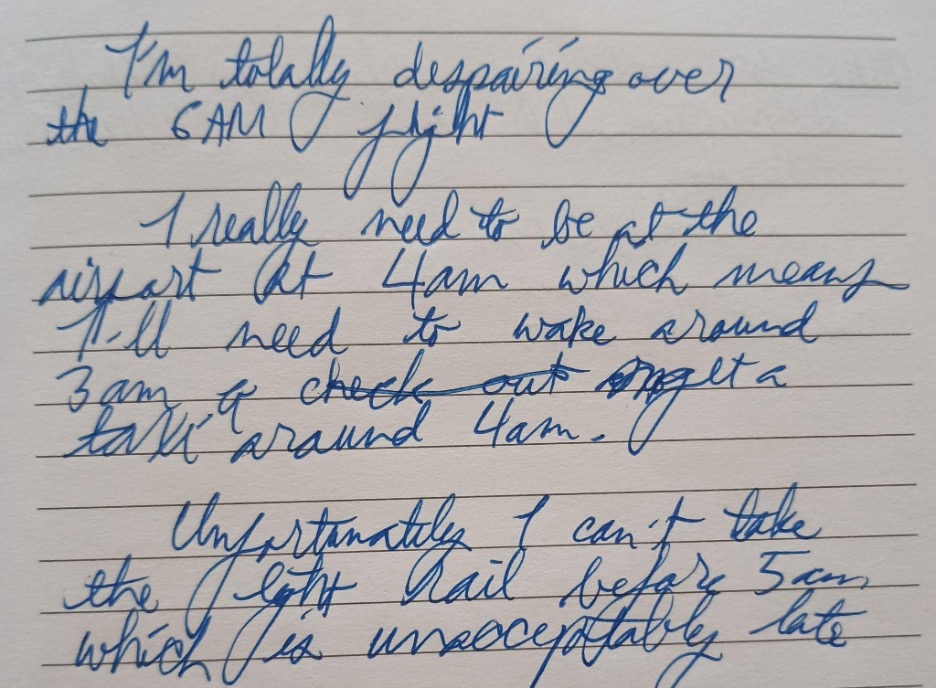
Figure 3. Author’s handwritten diary from CCCC 2025
Children were never far off. A Baltimore-local pair of colleagues had opened their home as an embassy of sorts to many conference attendees, but this came at the cost of them significantly splitting their attendance at the conference. Those unsung heroes deserve special acknowledgement for running a midnight shuttle service from downtown Baltimore to the airport during the hours that the MARC train was stopped. Some of my colleagues who drove to Baltimore from other institutions along the Atlantic had to split their time between the conference and the AirBnB, where spouses and children waited with saintlike patience. For my sins, I developed a splitting headache while walking between panels as I had to answer calls about paperwork for my children. After the first day of hard-charging conference material, and after staying up late to attend an important SIG, my jet lag finally caught up with me, and I missed a large part of the second morning’s events.
Figure 4. Second entry from author’s handwritten diary CCCC 2025
The SIGs appear, to this outsider, to be essential to continually rebuilding CCCC. From these offshoots, the discourse community re-constitutes itself. Here, too, the discourse community’s deepest modes of inter-communication are laid bare. While the eShowEvents conference app was a many-splendored marketplace for ideas and events, such an agora is built more fundamentally on the organizing labor done through SIG-specific discussions and Google Groups. And this, in turn, reminds us of the degree to which publics are built things. They are conditioned, afforded, and disclosed not only by privation but also by work in a world of exchange.
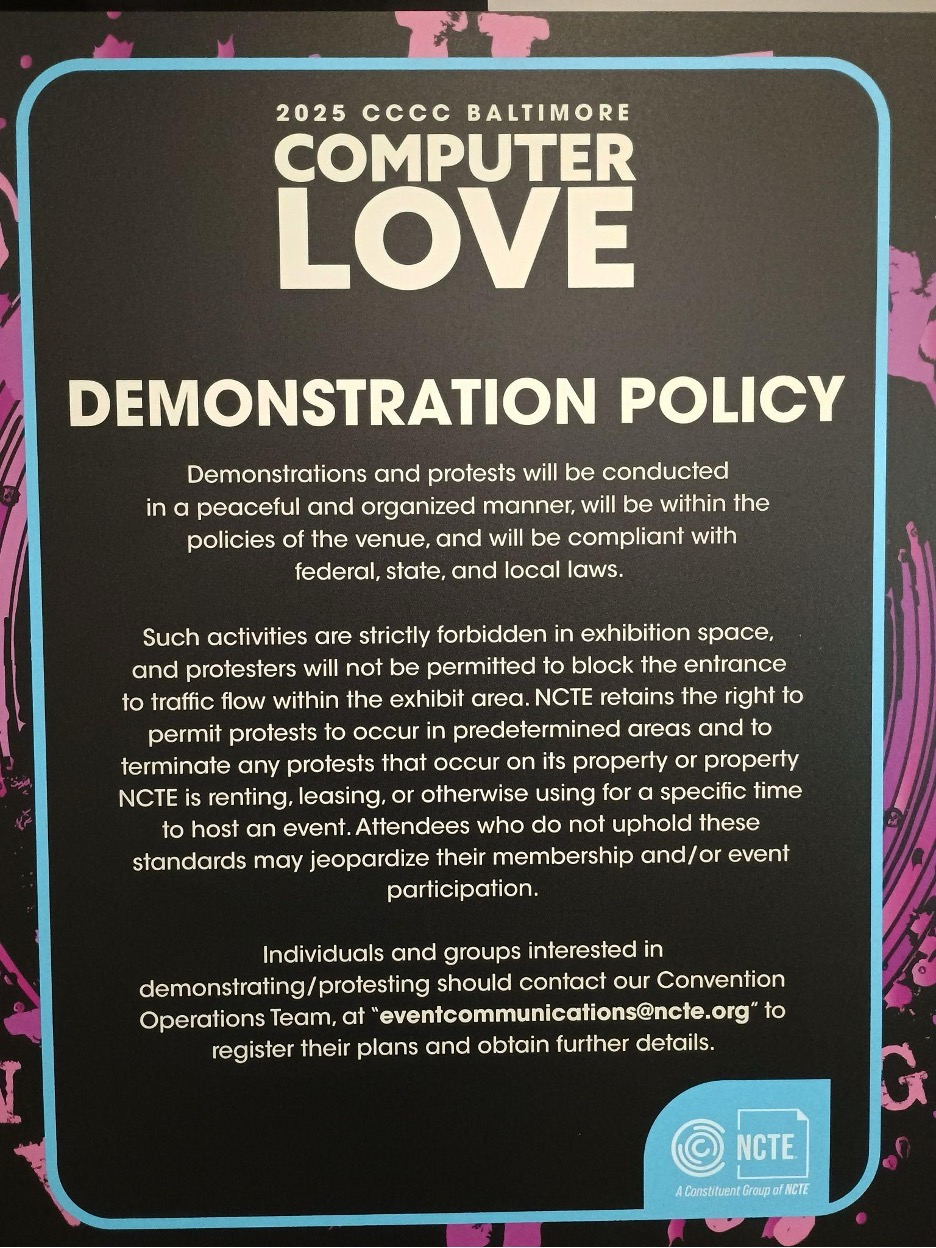
Figure 5. 2025 CCC Demonstration Policy Poster
Before I leave aside the work that conditions the conference, it’s worth remarking that the work of the conference is what conditions the appearance of the political in the conference. For instance, the labor advocacy page hosted on the official NCTE site has succumbed to extensive link rot (<https://cccc.ncte.org/cccc/labor/advocacy>). The durability of a public space requires constant work, and that includes digital public spaces. At this CCCC, as at others, there were doubtless behind-the-scenes struggles for activism to show forth. The Demonstration Policy posted at the peripheries of the main corridors specified that activities such as “demonstrations and protests” “will not be permitted to block the entrance to traffic flow within the exhibit area.” This Demonstration Policy, better than anything I could imagine, shows how the world of work affords, conditions, and discloses the world of politics.
The exchange value of writing is in a moment of extreme market volatility. The world of work conditions and affords our access to CCCC based on the relevant market alternatives. In 2025, the relevant alternative to education is AI. I set out to CCCC 2025 with a charge to learn about how scholars were dealing with the challenges presented by AI. I had only attended CCCC once before, in Spokane, 2024, where the discussion of AI was visceral and adrenal.
If I may mix metaphors, presenters in 2024 discussed their rapidly developing AI policies and techniques with a subtext of self-defense. In 2025, AI was discussed somewhat like Napoleon in War and Peace: What has the imperious monster done now? How much more of the world will they take from us? With the benefit of time and distance, some of us have become Clausewitzian, looking with Prussian coolness for AI’s “culminating point” (Kulminationspunkt).
The political, as I interpret Arendt’s use, concerns the commitments and permissions that create irreversible conditions in community relations. And here I have to also note that the essayistic conceit of dis-identification is breaking down, because such political commitments and permissions are necessarily identified—political decisions both draw on and constitute authority. The relevant authority for college composition and communication was invoked to explain AI policy at “Toward a Rhyme or Reason: Big 10 Policies on Generative AI and Academic Integrity in Writing Centers and Liberal Arts & Sciences Colleges.” And specifically, what was divulged concerned the decisions that were reached in an ad-hoc committee of Big 10 Liberal Arts & Sciences deans. There, more than any other point, was the schwerpunkt for AI’s interests. One Big 10 school dean “took everyone’s breath away” (reported as background to the panel) by taking a “position of no position” towards AI. That dean left the issue of AI policy at the level of the course and the instructor.
![Figure 6: A screengrab from a notekeeping app with this text: "## background "Big 10 Liberal Arts & Sciences Deans create ad hoc committee - meet for 18 months - [redacted] ver much at the lead, very much in favor of a hand-off approach - "took everyone's breath away" - took the position of no position - let instructors deal with AI at the level of course/instructor"](/sites/Clearinghouse/assets/et6.jpg)
Figure 6. A screengrab from a notekeeping app
I may be an outsider, but I do share the work of college composition and communication. We do this work under conditions of personal privations, the conditions of work, and under political conditions. These are the conditions that afford CCCC to us and disclose CCCC to us. It’s hard to imagine any singular decision that has been more significant to the working conditions of scholars at CCCC than the decision that I have just described. And it’s also hard to imagine a decision that could be more contrary to the solidaristic impulses of CCCC. The consequences of this permission will reverberate through CCCC for years to come. And they will condition other human affairs as well.
Works Cited
Adler-Kassner, Linda, and Elizabeth Wardle, eds. Naming What We Know: Threshold Concepts of Writing Studies. Utah State University Press, 2015.
Arendt, Hannah. The Human Condition. 2nd ed., The University of Chicago Press, 2022.
Clausewitz, Carl von. On War. Volume I. Duke Classics, 2012.