The 2025 Documentarian Collection
Edited by Jennifer Grouling and Adrienne Jankens

Welcome to the 2025 CCCC Documentarian Collection. In 2025, twenty-six CCCC attendees volunteered to serve as Documentarians. In this introduction, we lay out the context for their participation, share demographic data, and reflect on key themes from surveys. We introduce nine Documentarian tales below, but you may also navigate themes addressed in these tales by using the tags in the sidebar. In this way, we encourage you to connect this year's conference to other years.
CCCC 2025 was held in Baltimore from April 9-12. Throughout the conference week, Documentarians recorded their experiences and reflections and participated in the project's daily "preflection" and reflection surveys. The number of participants completing these twice-daily surveys ranged from 21 (Thursday morning) to 10 (Saturday evening). Documentarians were sent a CFP for "Tales" in August 2025. We are happy to introduce nine tales this year that focus on a variety of themes, including community, food, friendship, academic identity, and the passage of time.
Setting the Stage: Baltimore in April 2025
As this collection is meant to be the first of what we hope will be years worth of archives, we find it important to set the stage by reminding future researchers the context within which the conference was held.
This year was the first year that Adrienne Jankens and Jennifer Grouling co-facilitated the Documentarian project. NCTE funded a Documentarian reception on Wednesday evening at the conference to promote the program and welcome this year's Documentarians. In addition, Adrienne and Jennifer spread QR codes informally around the conference to recruit more participants.
Held in early April, the conference was unusually late in the year for CCCC. This was likely still due to the disruption from postponed and virtual conferencing that continues to impact conference contracts with host cities after 2020. The theme of the conference was "Computer Love," taken from a song by funk band Zapp. Kofi J. Adisa was the program chair. The CFP invoked themes of music and remix, mentioning ideas such as the mixtape and "side B." In this way, the CFP perhaps invokes a nostalgic feel that is carried throughout some of our Documentarian tales. The Chair's Address was given by Jennifer Sano-Franchini and was titled "Timely, (Un)Disciplinary and Solutions-Oriented: Remembering and Enacting Abundance in These Times When We Just Have to Keep Going." The talk addressed feelings of overwhelm and crisis asking us to think collectively and strategically to move forward as an organization.
The conference was held in the Baltimore Convention Center, an expansive building with multiple entrances, but only a few that were actually open. Navigating this space was not an uncommon annoyance for Documentarians. Nor was the conference center solely occupied by CCCC attendees; many participants noted the disruption that came from sharing the space with a cheerleading competition that weekend. The weather was rainy with highs in the 50s and lows in the upper 30s, somewhat colder than a typical April in Baltimore. The evening of Saturday the 12th marked the beginning of Passover, and one participant noted visiting with local family to celebrate a seder.
April 2025 was also a transitional moment for our country and our world. It felt as if the world was holding its breath, waiting to see exactly what the second Trump presidency would throw our way. Threats to higher education budgets and DEI were in the air. Some schools were beginning to cut programs with DEI or "inclusive excellence" in their titles. Federal grants were beginning to see cuts; yet, there was no knowing at this point where universities would resist and where they would comply. News focused on international conflicts that week: the Palestinian Conflict, the Russia-Ukraine conflict, and Trump's back-and-forth on imposing international tariffs. ICE presence was increasing, but there were not yet troops occupying D.C.
It was within this context that our Documentarians set out to attend panels, meet colleagues, and explore Baltimore.
Documentarian Demographics for 2025
The pre-conference survey collected demographic information from this year's Documentarians.
We had a nearly equal number of non-tenure track (10) and tenure-track (9) faculty participate this year as well as 3 graduate students and 1 non-faculty member. Almost half (47.8%) of the 2025 Documentarians had attended the conference more than three times, but 30.4% were attending CCCC for the first time.
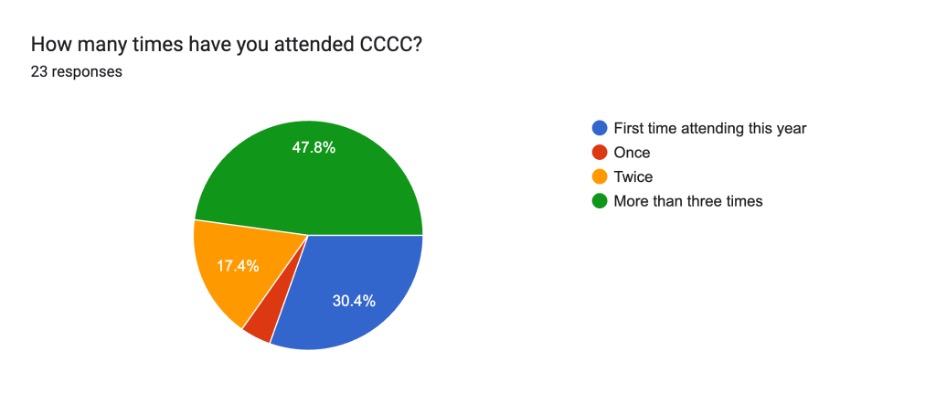
Figure 1. How many times 2025 Documentarians had attended CCCC.
Following the trends of previous Documentarian cohorts, over half (56.5%) of the project participants identified as female. 39% identified as male and 1 participant as gender queer. The report on the 2020 Documentarian cohort does not include information about sexual identity. The 2025 cohort identifies as 63.6% straight, 22.7% bisexual, 9.1% gay, and 4.5% (1 participant) gender queer.
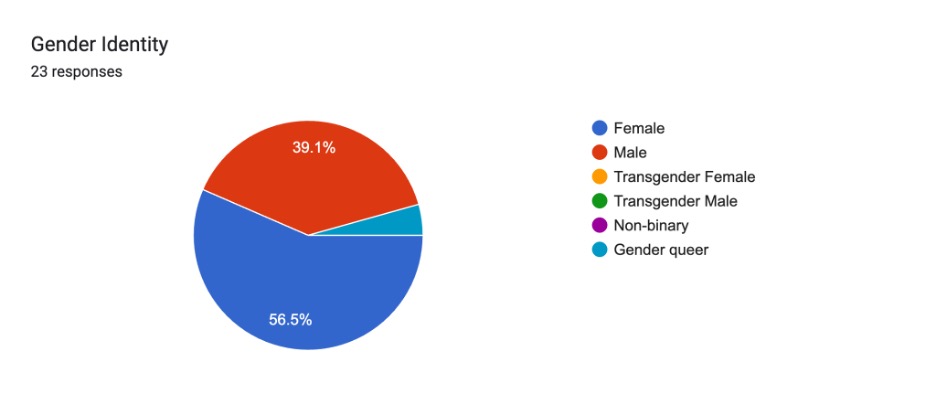
Figure 2. Gender identity of 2025 Documentarians.
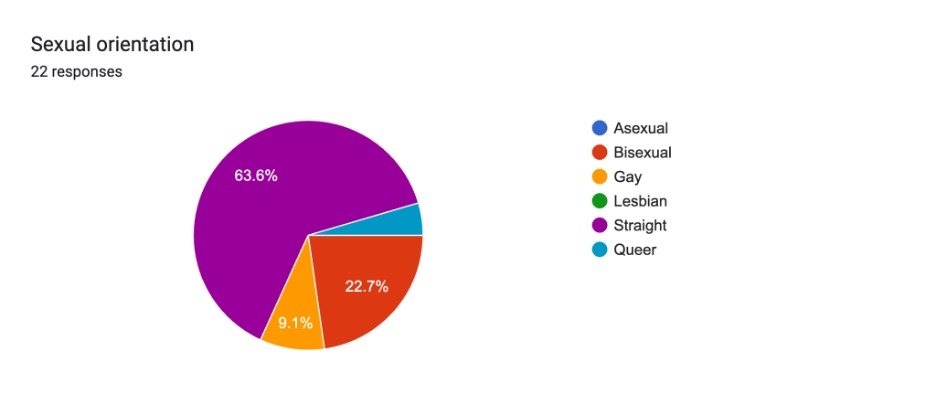
Figure 3. Sexual Orientation of 2025 Documentarians.
Again, following historical patterns for this project, the Documentarian cohort was a majority white participants (76.3%). 8.7% of participants identified as Asian, including Asian Indian or Pacific Islander. One survey participant (identifying as Mexican-American) suggested we make the Latino/Hispanic/Spanish category more inclusive by listing more labels.
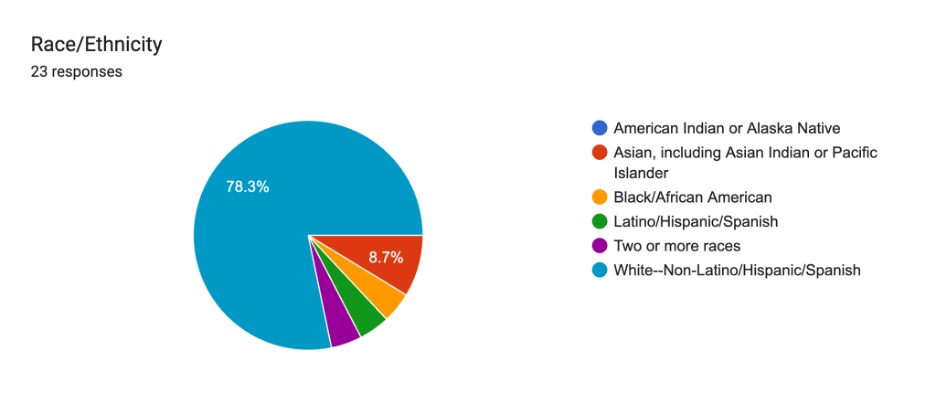
Figure 4. Race/ethnicity of 2025 Documentarians.
78.3% of survey participants did not identify as having a disability and 21.7% noted that they identify as having a disability but were not getting accommodations for this disability at the 2025 conference.
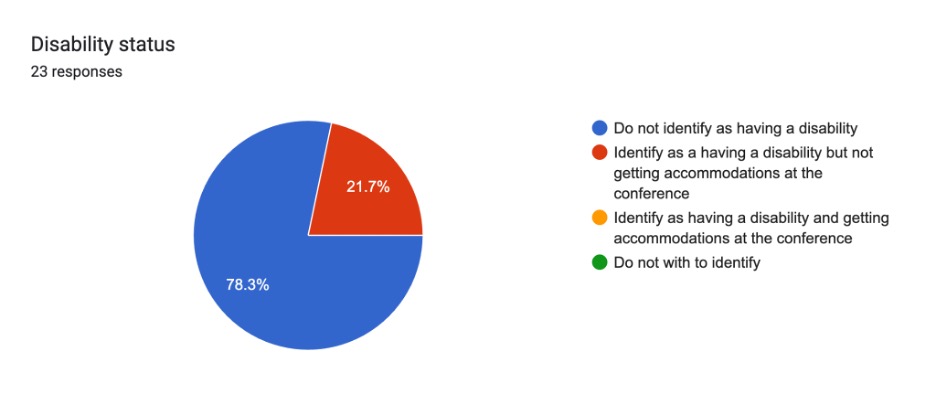
Figure 5. Disability status of 2025 Documentarians.
Overall, this demographic data seems particularly important in the way that tales of newcomers vary from those of experienced CCCC goers. Newcomer tales reflect on their mentors, the welcoming atmosphere at CCCC and meeting new people, while long-term attendees reflect more on renewing long-time friendships and mentoring relationships. Academic status, including the gaining and losing of status is also frequently addressed in our tales. As such, they reflect who feels welcome, included, and recognized at the conference for their academic status.
Gender, sexuality, race, and disability do not factor heavily in the tales themselves, although they do offer diverse perspectives, including those of International scholars. Parenting, however, is one demographic not represented on the survey that is frequently mentioned in our tales, including commitments and concerns about children while visiting the conference.
Central Themes in the 2025 Documentarian Surveys
After collecting the conference preflection (morning) and reflection (evening) survey data, we read for both quantitative and qualitative themes. With the beginning of the CCCC Documentarian Exhibit, we decided to create yearly prompts based on our impressions of the data in the surveys. These prompts are naturally loose but encourage participants to reflect on the way their experiences fit within a few overall themes.
The morning and evening surveys include specific questions about social interactions during the conference, but interactions with others come up regularly in other questions as well. For example, we ask about how conference time is scheduled, which often leads to musings on how social plans factor in with attending panels and networking. Many Documentarians felt a sense of belonging at CCCC and had regular contacts at the convention. However, the nature of these contacts naturally varied by person and by newness to the field and convention. Some participants recorded meet-ups with old friends only seen at CCCC, while others wrote about meeting new people. Some had connections focused on the work of the profession, whether it was colleagues who traveled together or collaborators from multiple locations meeting up in Baltimore. Others engaged with friends where connections went beyond professional life or saw family in the area.
Thus, our first option and most often followed prompt for essays centered on how connections are made at CCCC, posing the questions:
- What does it mean to you to connect with community at CCCC?
- Do you see the same people year after year, and if so, what does doing so mean to you?
- Or do you come to build new connections? If so, how do you go about that?
Our second prompt came less from what was in the surveys and more from what appeared to be absent or merely hinted at: the current moment in both the history of our country and the history of higher education. Yet, the surveys showed a general lack of discussion of the political with a few notable exceptions. Upon going into the city on Saturday, a participant mentions fear at seeing a stranger that could be a plainclothes ICE agent at the Capitol. Meanwhile, Jennifer wrote about her upcoming move to a safer state, yet found the survey to be a limited format for discussion of these very real experiences. Of all the many political moments present in April 2025, the rise of AI was the one that dominated our surveys. This was a reflection of the conference program itself. At this year's Labor Caucus panel, an audience member commented that it was the only panel to directly mention Palestine while the program was littered with AI panels. A search of the program supports this perspective as the word "AI" appears 319 times in the program to Palestine's 3. The more general word "politics," appears only 12 times. While the "Computer Love" theme may have skewed the conference toward technology such as generative AI, this imbalance was also something felt by Documentarians.
Our second prompt asked:
- How did this particular political and historical moment interact with CCCC for you?
- Did it affect your interactions at the conference or in Baltimore, or was it something you could temporarily ignore while at the conference?
Although we sought more stories on how the current political moment impacted CCCC, like the surveys themselves, our participants mainly hinted at these issues. For example, in an essay that addresses both the political and the personal, Evan Thomas includes a photograph of a sign about the 2025 CCCC Demonstration policy. Nevertheless, as this collection grows into a larger archive, it is important to acknowledge the historical moment in which we found ourselves during the 2025 CCCC.
Our Takeaways as Editors of the 2025 Collection
While we are happy to have engaged authors from a number of kinds of academic positions as contributors for this collection, we acknowledge that we need to continue to work on more inclusive representation across the Documentarian cohort and within the collection of Documentarian tales. The challenge of actualized inclusivity is a problem cited by Lindquist, Straayer, and Halbritter in their introduction to the 2023 collection Recollections from an Uncommon Time, in which they write,
We had hoped to hear from a broad diversity of voices from the field; however, we found that the majority of those who participated in the surveys were white women (Figures 3 and 4). In some ways, this body does represent the overall demographics of our field, but the gender and race/ethnicity demographics became especially important as we engaged in the editorial process. We found that we did not always have a diverse range (in the available set) from which to select (16).
Lindquist, Straayer, and Halbritter go on to reflect on the "few submissions from writers who identify as male, and especially few from R1 institutions" (18). Those limitations do seem to be addressed in our present collection, meeting the original editors' hope that "more male-identified Documentarians from across the diverse reaches of our field will volunteer to serve in the role" (18), however with an overall small pool of Documentarians completing surveys during the conference, we still have work to do to engage participants from across the field more broadly. For us, this inclusion is integral to why we agreed to take on leadership of the Documentarian project. Our hope is that by expanding the Documentarian tales to a yearly collection we can share more diverse perspectives on the conference over time.
As we reflect on the overall takeaways of the 2025 CCCC Documentarian experience, we wonder, what feels most important at this particular moment-in-time? While we prompted authors to consider the political and social moment, we instead see a tendency to engage with nostalgia. Is there perhaps a longing here? A fatigue? A feeling that CCCC can be a healing space that connects many of us to our roots, our friends, our community? We also see a need to navigate the conference strategically, to balance health (both mental and physical) with what is still ultimately a work task. What does the navigation of our participants, both newcomers and seasoned CCCC-goers say about the role of conferences in today's academic life? Our goal in building the Documentarian project as an archival exhibit is not to answer these questions but to invite others to engage in them over time. How will the experiences of CCCC 2025 compare to future CCCC? Only time will tell.
Works Cited
Jankens, Adrienne, and Jennifer Grouling. "Documenting a Documentarian Friendship." Recollections from our Commonplaces: 4C21-23 Documentarian Tales, edited by Bump Halbritter, Julie Lindquist, and Bree Straayer. CCCC / NCTE / WAC Clearinghouse, 2026, pp. 153-164.
Lindquist, Julie, Bree Straayer, and Bump Halbritter. "Introduction." Recollections from an Uncommon Time: 4C20 Documentarian Tales, edited by Julie Lindquist, Bree Straayer, and Bump Halbritter. CCCC / NCTE / WAC Clearinghouse, 2023, pp. 1-33.

Documentarian Tales Included in the 2025 Collection
In this 2025 collection, there is a combination of contributors who engage in some nostalgia as they reflect on their previous CCCC experiences (and the friends and colleagues with whom they experience the conference) and their navigation of CCCC 2025 (e.g., Grouling; Moore; Varty; Walker); contributors who describe their experiences as relative newcomers, perhaps reflecting for the first time on whether and how the conference can provide the kind of community that will sustain their intellectual work and professional development (Dela Rosa; McFadden); and contributors who write to weigh the value of conference engagement across time (Jankens; Ly; Thomas).
- Feeling Connected, Reconnected, or Unconnected: Navigating CCCC 2025 and Cost/Benefit Ratios of Future Conference Connections
-
By Adrienne Jankens
Adrienne brings the perspective of a future conference organizer (CCW) to her CCCC 2025 experience. She reflects on how conferences are navigated; how goals are set for attendance and social engagement. In this piece, Adrienne draws from our documentarian surveys as well as her own experiences.
- 2025 Contributors
-
Meet the 2025 collection contributors.
- Community's Essential Value: My Experience Learning, Shaping, and Sharing in Partnership and Friendship
-
By Nicole Guinot Varty
Nicole also shares strategy for navigating CCCC but focuses on how the intentional building of community is essential to her strategy. This essay also explores strategies for “healthy engagement” that balances personal needs with conference attendance.
- Musings on CCCC Bayanihan
-
By John Paul Obillos Dela Rosa
In John Paul’s tale we see the intersection of multiple identities, including the perspective of an international graduate student attending his first CCCC. John Paul uses the Filipino concept “bayanihan” to talk about how he experienced community in Baltimore.
- Finding Community through Access Despite Chaos at CCCC: Reflections from a Community College Professor's First Time Attending
-
By Jenny McFadden
Jenny’s tale also shares the experience of a CCCC newcomer, but not a newcomer to the field. She shares the challenges of balancing family and mental health concerns with CCCC attendance. We see here the intersection of CCCC and TYCA and gain insight into the challenges two-year college instructors face.
- The CCCC Family Reunion
-
By Don Moore
As a long-time CCCC attendee Don reflects on how his conference attendance feels like a family reunion. As a solo compositionist at his institution, Don appreciates a chance to return to his roots by attending CCCC.
- We Are All Gray Now
-
By Jennifer Grouling
Finding herself at a point of personal and professional uncertainty, Jennifer reflects on the role CCCC has played in friendship and community over the years. She shares memories of past CCCC, the way that her graduate school friendships have grown, new friendships have formed, and how CCCC has provided the chance for sharing life’s experiences with new members of our field.
- Conferencing Matters: Investing in My Rhetorical Identity
-
By Quang Ly
In this essay, Quang reflects on how he strategically navigates CCCC. The metaphor of currency conveys how certain activities are worth more within academia and where conference presentations and networking fall in this system of disciplinary exchange.
- (Re)Constructing a Self in Timespace: Reflections on the CCCC in Baltimore
-
By Clay Walker
This essay engages with the topic of academic identity through a more theoretical lens, specifically Bakhtin’s concept of the chronotope. We see here Clay’s navigation of CCCC and Baltimore shapes both his conference experience and his sense of self.
- The Disclosure of Conditions and the Conditions of Disclosure
-
By Evan Thomas
Evan begins his tale by identifying as an “expert outsider” to the field of rhetoric and composition, as someone working in the field but who studied early modern literature. Drawing from this background, he explores what “disclosure” means at CCCC, including trusting a new friend made at the conference. This rich essay also engages with the current moment, noting the way AI was talked about at the 2025 conference as well as the subtle signs of unrest through limiting demonstration policies.