Finding Community through Access Despite Chaos at CCCC: Reflections from a Community College Professor's First Time Attending
By Jenny McFadden
Tags: Family, Children, Mental Health, Imposter Syndrome, Newcomer, TYCA, Community College

Though I am no stranger to the conference circuit, CCCC is a gathering that I had not been privileged to attend prior to 2025. Actually, though we had been planning for months, and though I had proposals accepted for presentations at both the CCCC and the Two-Year College English Association (TYCA)’s national conference the day before, it almost didn’t happen. A string of family emergencies involving handcuffs and psych wards, coupled with a gap in child care nearly derailed everything.
But back to the beginning. When my department chair at our community college on the Eastern Shore of Maryland learned that CCCC would be held within driving distance, he began a relentless campaign to ensure that as many of our Arts & Humanities team who wanted to attend would be able to do so. Thanks to his dedicated efforts and the support from our dean and executive leadership, we found the funding to bring a sizeable cohort with us. Since community colleges typically do not have an overwhelming travel budget for faculty members, the efforts of our chair and administrators were commendable. They were also supplemented, as a few of us, myself included, found other resources to support our attendance—I was there in part because of a professional equity grant provided by CCCC.
Being able to be present and participate at this particular conference was beyond meaningful. I appreciate the existence of TYCA, and I was also pleased to attend their conference the day prior to CCCC. My institutional colleagues and I, and even one of our student participants from a recent research project we championed, very much enjoyed presenting and attending sessions. But to also have a seat at the table at CCCC was empowering in perhaps an even greater way. So many begin their higher education journeys at community colleges—the National Student Clearing House Research Center’s enrollment estimates were at nearly five million students at campuses like ours in Spring 2025, and the same source claimed that community colleges saw the largest annual enrollment growth (5.4%) across all types of institutions. Yet, in her 2022 Chair’s letter, Hassel acknowledges that “two-year college faculty make up (depending on the data source) approximately half of writing instructors and faculty in the country” but goes on to state that we community college instructors make up “only a small percentage of CCCC members” (403). The voices of those of us who teach writing to this enormous population of students are frequently underrepresented during the invaluable conversations that take place as colleagues connect at CCCC. Factor in that my particular institution is rural and serves a large number of students below the poverty line, then there are perhaps even fewer professionals “like us” given the chance to network and participate in the largest gatherings (McNamee and Van Horn) at the forefront of teaching writing.
With this as my context for attendance, I was truly grateful for the opportunity. As I mentioned, a colleague from my own institution and I were presenting alongside one of our students for a TYCA panel presentation. I was also fortunate enough to have a proposal based on my work as an adjunct accepted for presentation at CCCC. . . . Once I had earned my Ed.D. in Literacy Studies, I had been invited back to teach a course titled “Seminar for Scholarly Writing in Research and Professional Contexts”—and during that experience, I noticed themes of imposter syndrome surfacing in the writing of my brilliant yet hesitant doctoral students. At the time, I was also questioning my qualifications to teach them, just as they wondered through writing if they had what it took to make it in their program. Our parallel feelings of self-doubt became the impetus for the proposal we submitted to Cs, Lip-Syncing Academic Realities: Literacy Studies, Imposter Syndrome, and the Authentic but Academic Text. My work with my community college students, my experiences teaching writing at the graduate level, and my engagement with my insightful doctoral students were all to be a part of the much anticipated presentation—who knew that a first-generation scholar, daughter of a carpenter who did not attend high school, would one day stand in front of a room full of literacy professionals, delivering a message of hope and empowerment alongside other successful colleagues, men who overcame systemic barriers pertaining to their own identities to participate in the panel we had designed to encourage one another and all who attended our session?
Yet, as April neared, disaster ensued in my personal life. Our previously healthy nineteen-year-old daughter, still living at home with us, had suffered a manic episode during the summer of 2024, and while she had achieved stability since then, by the time January and February rolled around, she was frequently in and out of the hospital as doctors tried to find the right medication to treat the recurring mania. Life was a blur of emergency rooms, crying spells, screaming matches, spending sprees, and visits from police and mobile crisis teams. Somehow, I kept teaching. Somehow, I kept caring for my two younger children, just nine and five years old. I looked at my husband in the early winter and asked him, heart sinking, if I should cancel my Baltimore trip.
“You really think we’re still going to be dealing with this in April?” he asked.
Worse. My daughter’s condition is, at least in part, genetic. As her manic fits continued, the stress of the circumstances, paired with other factors beyond our control, caused my husband to spiral, too. By the spring, they had both been hospitalized multiple times, her more times than I could count on one hand.
I thought about cancelling my registration, withdrawing from my presentations. My family needed me.
But life seemed to be trending up, at least in the chaos of this new normal. I would be letting down my work family, who had moved mountains for us to have this opportunity. I would be letting down not one, but two sets of colleagues, from two different institutions, if I chose to stay behind: my co-presenters for both the CCCC and TYCA conferences were counting on me.
I almost didn’t go. As we held a Zoom meeting to finalize the imposter syndrome presentation, I explained to my colleagues that if I didn’t make it, it was because my family needed me too much. But as the conference neared, it seemed that my husband and daughter were relatively stable. She had been accepted into a partial hospitalization program to more closely monitor her meds. He was far from his usual self, but I thought he was getting better.
I already had substitutes for my classes lined up.
Knowing that I couldn’t leave my young daughters home with the mental health status of the other adults in our home being what it was, I orchestrated a complicated arrangement wherein I took them to another family member’s home, arranged rides to and from school for Wednesday morning and afternoon, and pulled a round-trip Baltimore hike (about two and a half hours) twice—once to bring our student presenter up and back for TYCA, at which point, when I dropped her off, I picked my children up from a family friend’s home, and began the journey back to Baltimore with them in tow. My cousin had agreed to meet me at the hotel on Friday, allowing me to enjoy the majority of the conference and complete my own presentation without worrying about my daughters’ childcare situation. I had reached out to their schools, explaining the situation, and the district had graciously excused their absences.
As the plan fell into place, I emailed the Documentarian Team—I had signed up for the opportunity, knowing it would be an invaluable chance to reflect through writing, memorializing my first CCCC experience—and explained that, given my current situation, I was no longer sure of my ability to participate.
An hour later, I received a comforting email that instructed me to take care of myself first, and “to take part in as much of the Documentarian role as you can, as long as it’s not too much of a burden for you!”
That was my first, but not last, contact with someone with whom I would not have crossed paths if not for CCCC, who acted with empathy, grace, and understanding.
As someone new to CCCC, these are the moments I remember most when I think about what it meant to find community in Baltimore, 2025. Direct lines from my Documentarian Surveys are italicized:
“The kids' moods dictated how much time we spent at the conference [on Thursday]. I didn't do as much as I wanted, but I was proud of them for behaving well (for the most part).”
“I had meaningful encounters as other participants were kind to my children throughout the couple hours we were there.”
The first session I tried to attend was one on ADHD. I hoped perhaps the presenters might appreciate a live example of ADHD (my nine-year-old daughter attending their session), and I wanted to attend both as a parent to a daughter with the condition, and as an instructor to many students who self-identify as such. But my heart sank as I neared the door, my children’s hands in each of mine as my workbag smacked against my briskly striding thigh—the session was packed, and there was no room to sneak in surreptitiously and grab a seat in the back.
We wandered down the hall and found, as the session block had barely started, a room where all of the participants sat around a single table. I hesitated at the door, asked if it would be okay if we joined, indicating that they had coloring books and a (silenced) Nintendo Switch.
The speaker graciously welcomed us, and I snuck in to sit at the table behind the one where the other attendees were gathered, a back table, just in case we had to make a quick exit. The presentation “was excellent. I enjoyed the roundtable discussion offered. The presenter was examining insider critiques with high-level country when it came to the genre of hip-hop. He inspired me to think about identity and reflexivity, all while presenting in a manner that was accepting of the two children I had in tow.”
After staying behind to thank the presenter, we explored the poster sessions and the vendors. A kind attendee encouraged my daughters to select ribbons they could attach to their name badges. Shay chose one that read “I got the Write Stuff,” as she proudly told me, “Because I am a writer!” I told my five-year-old that she should pick one about reading, since she was learning to read so well. I selected a pink “Literary Lover” for Ivy, and when she excitedly told me she also wanted a blue ribbon, we added “Rebel Reader.” (I chose “First-Time Attendee” and “Presenter”). Another compassionate individual watching me take photos of my children generously offered to capture one of the three of us. Of course, that was about the time Ivy stopped cooperating. It was still exciting to have them experience their first academic conference at such young ages. I was encouraged by all the smiles and kindness directed their way . . .
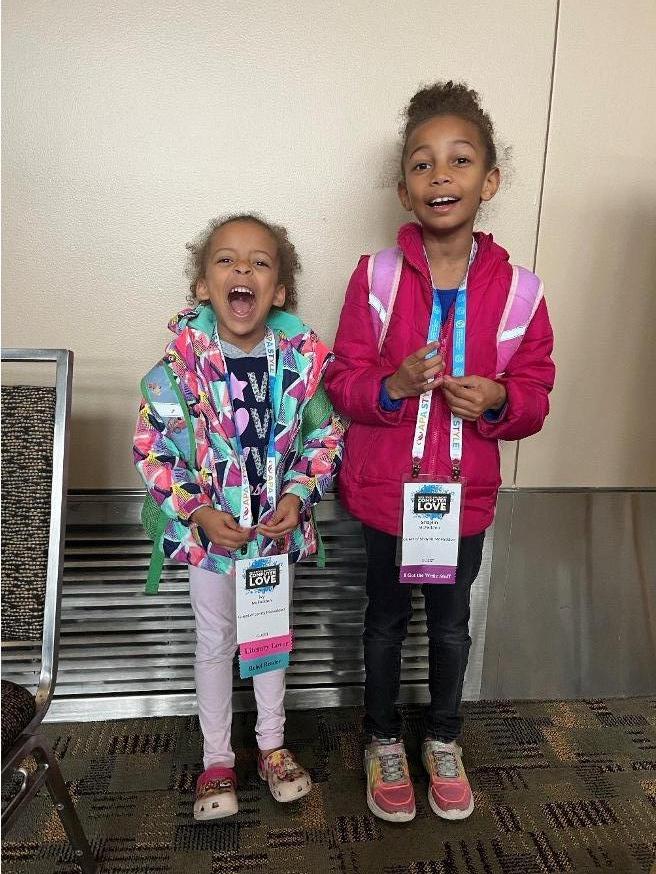
Fig. 1. Like their mother, Shay (right) and Ivy (left) enjoyed their first CCCC experience.
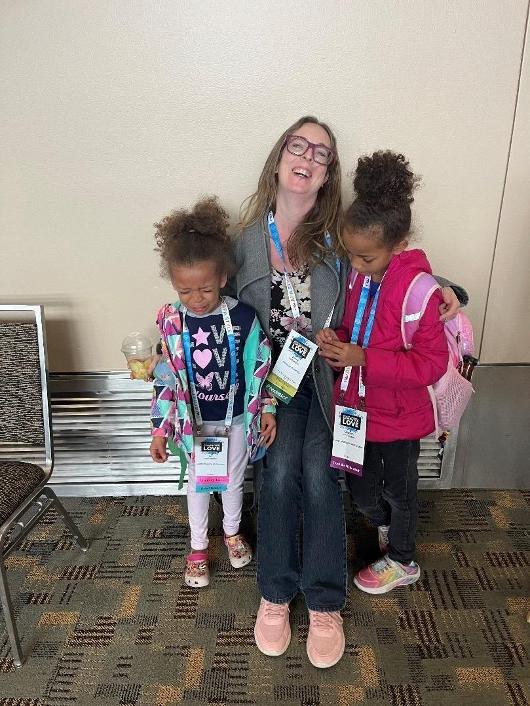
Fig. 2. At least until it was time for mom to hop in the picture with them.
As we continued exploring the venue, I found a colleague whose session I had attended the day before at TYCA manning a table for a writing studies listserv. “You should join. You don’t seem at all busy,” he joked, gesturing to the children hanging onto each of my arms. But actually, I did join! And consequently, I have one possible publication (pending peer review) in the works as a direct result of joining that email service. Community. The kindness and grace extended when professionals counter the unexpected—a working mother who had no choice but to bring her children along with her or miss an entire day of sessions.
The following morning, before my presentation, I wrote the following as part of my Documentarian Survey:
“Today I hope to feel as if I belong everywhere I go. It's interesting--our panel presentation is on imposter syndrome, and maybe that has given me a sense of confidence (earned or unearned) that influences my opinions about where and how I should fit in.”
I can’t help but wonder if, looking back, I wrote that in part because of how much academia signifies that children do not belong, that a woman cannot do it all if she also chooses her family—even though so many women do it every day. “I wish the family room had a certified child care professional present.” Even though my children and I were received with overwhelming compassion the prior day. If I’m already on the fringes of CCCC membership because I teach at a community college, because I am a first-generation scholar, because my socioeconomic upbringing was not as privileged as many with whom I ascended the ladders of higher education, how much more had I potentially marginalized myself by trotting two children around the day before? And yet, we were welcomed. With open arms.
I had continued writing in that same survey, “Knowing my children will be safe and well-cared-for today, I feel a sense of relief and excitement. Too bad it's supposed to rain.”
And rain it did. One of our presenters was in a car accident (she wasn’t hurt, but she also didn’t make it to our panel after her excitement on the bypass that morning). A second walked in moments before we were ready to begin: parking troubles. Which left me alone with our third panelist, a colleague whom I had never met in person. He was from a different institution and a friend of my former student (the co-writer of our session proposal), who had recommended him as a fill-in when yet another co-presenter had bailed early on.
Connection and Community
As we nervously game planned what we would do if neither of our other two panelists arrived, our mutual friend with the parking troubles entered, dramatically, with about sixty seconds to spare. We breathed. We regrouped.
We killed it. I know, because my boss (read: department chair) told me so afterwards.
As I think back to the connections I forged and fostered at my first ever Cs event, I know that however many more I am blessed to be able to attend, this will be one I never forget. I listened in awe as my Black colleagues on our imposter syndrome panel spoke of finding their way in a system not designed for them. I moderated and contributed—how is John Meister’s daughter able to stand in this place of privilege, to tell others it is more than okay to be one’s authentic self and still knock down every damn barrier placed in one’s way?—I drank in the applause.
I connected with my new colleague from our panel, but I further connected with my colleagues from my home institution—particularly my friend who showed up at my hotel door Thursday evening with two glasses of wine, knowing I couldn’t leave my children.
I connected with my cousin—an insurance industry expert, not an academic—who dropped everything to babysit my children Friday through Sunday, so I would not have to miss another session. Though we hadn’t been geographically close before that weekend, we are now not only cousins, but forever friends.
I connected with myself. I am a proud community college educator. I am a woman who gives her all to her family, and her students. And I will not apologize for that.
I will strive for excellence. And I will keep being the teacher and mother that I was born to be.
Even when it rains.
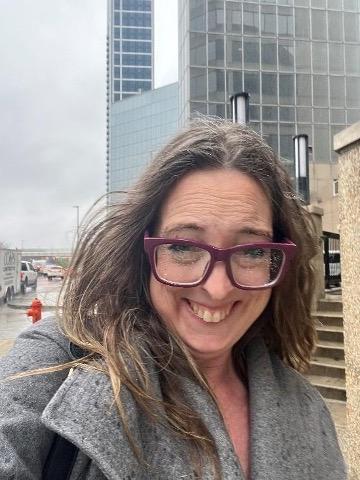
Fig. 3. Walking back to the hotel after a day of sessions in the rain.
Works Cited
Current Term Enrollment Estimates: Spring 2025, National Student Clearing House Research Center, 22 May 2025, nhttps://nscresearchcenter.org/current-term-enrollment-estimates/ Accessed 19 Sept. 2025.
Hassel, Holly. “2022 CCCC Chair’s Letter.” College Composition and Communication, vol. 74, no. 2, 2022, pp. 391–404. NCTE, https://doi.org/10.58680/ccc202232283.
McFadden, Jenny, Kenyatta Graves & Dennis Winston. Lip-Syncing Academic Realities: Literacy Studies, Imposter Syndrome, and the Authentic but Academic Text. 2025, Presented at the 2025 Conference on College Composition & Communication Annual Convention.
McNamee, Ty C., and Austin D. Van Horn. "Faculty Development at Community Colleges in US Rural Contexts." Journal of Education Human Resources, vol. 42, no. 1, 2024, pp. 67-87.